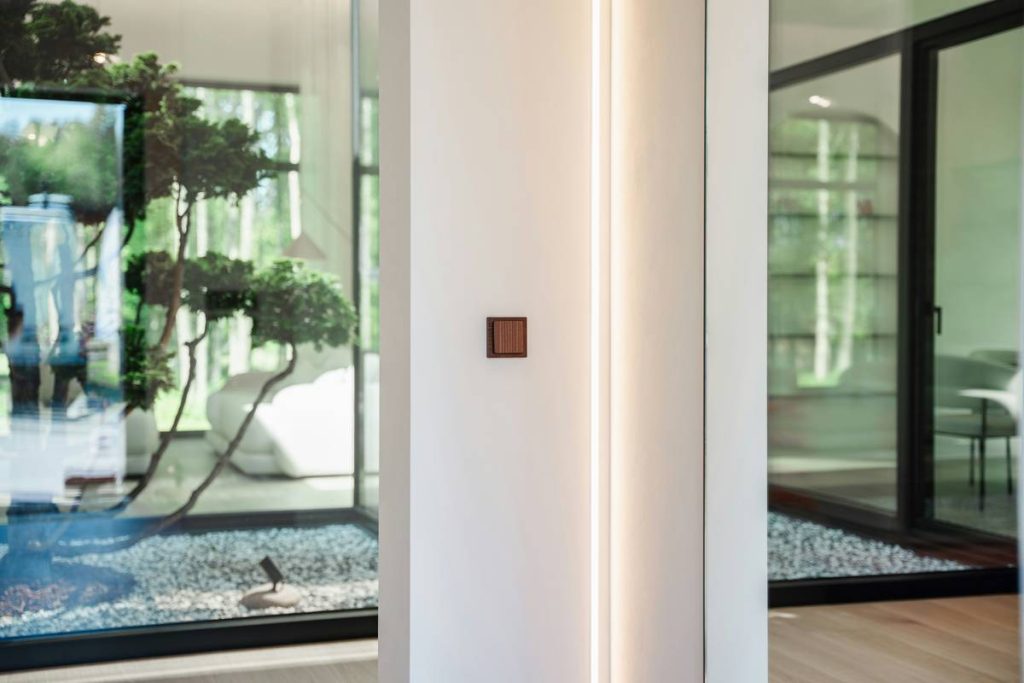
Ever walked into a room that somehow knew you needed your coffee table to double as a wireless charger, your ottoman to hide your dog’s leash, and your bookshelf to hum soothing white noise? No? Just me—and my very confused Roomba—after I over-engineered my living room trying to “future-proof” it with every gadget under the sun.
If you’ve been eyeing sleek, minimalist interiors but keep tripping over tangled cords, clunky speakers, or furniture that just… sits there like a silent bystander, you’re not alone. The truth? Modern smart design isn’t about stuffing tech into wood—it’s about creating seamless harmony between form, function, and intelligence. In this deep dive, you’ll discover:
- Why traditional “smart home” setups often fail in real life
- How smart furniture bridges the gap between aesthetics and automation
- Actionable steps to choose pieces that actually improve daily living (not just look cool on Instagram)
- Real-world examples from designers and early adopters who’ve nailed it
Table of Contents
- The Pain Point: Why Your Smart Home Feels Half-Baked
- How to Choose Smart Furniture That Doesn’t Suck
- 5 Best Practices for Integrating Modern Smart Design
- Real Homes, Real Results: Case Studies That Work
- FAQs About Modern Smart Design
Key Takeaways
- Modern smart design prioritizes invisible tech, intuitive controls, and timeless aesthetics.
- Over 68% of smart home buyers cite “clutter” and “complexity” as top frustrations (Statista, 2023).
- The global smart furniture market is projected to hit $12.4B by 2028 (Grand View Research).
- Start with one high-impact piece—like a charging-integrated side table—before going all-in.
- Interoperability (via Matter, Thread, or Zigbee) is non-negotiable for true modern smart design.
The Pain Point: Why Your Smart Home Feels Half-Baked
You bought the smart lights. You installed the voice assistant. You even got the robot vacuum that maps your floor like a CIA drone. So why does your home still feel… disjointed?
Because most smart home setups treat furniture as an afterthought—an empty stage for gadgets to perform on. But furniture isn’t passive. It’s where we rest, work, gather, and recharge (literally and emotionally). When your coffee table can’t power your phone, or your bed doesn’t track sleep quality without looking like a NASA control panel, the magic fades fast.

As a product designer who spent three years at a Berlin-based IoT studio (yes, I once soldered a USB-C port into a walnut desk—don’t ask), I’ve seen brilliant tech ruined by poor integration. One client demanded RGB lighting in their dining chairs. “For ambiance,” they said. What they got? Glowing red butts during Thanksgiving dinner. Not exactly modern smart design.
Optimist You: “Tech should enhance life!”
Grumpy You: “Ugh, fine—but only if it doesn’t make my couch look like a spaceship control deck.”
How to Choose Smart Furniture That Doesn’t Suck
Not all “smart” furniture deserves the label. Some are glorified USB hubs masquerading as innovation. Here’s how to spot the real deal:
Does it solve a real problem—or just add novelty?
Arrival’s Smart Entry Bench includes hidden shoe storage, a motion-activated light strip, and a wireless charger—all because people actually drop keys, fumble in dark hallways, and need phone juice after work. That’s purpose-driven. A “smart” plant pot that tweets when thirsty? Cute. Useful? Debatable.
Is the tech invisible or integrated?
True modern smart design hides complexity. Lift a Fernish Luma Desk, and you’ll find cable management channels, Qi charging pads, and even occupancy sensors—all flush with the surface. No blinking LEDs. No exposed ports. Just clean lines that happen to be intelligent.
Can it play nice with your existing ecosystem?
If your furniture only works with one app or brand, run. The future is interoperability. Look for certifications like Matter or Thread. IKEA’s new MATTER-enabled desks sync with Apple Home, Google Home, and Amazon Alexa out of the box—no middleware required.
What happens when the software updates… or dies?
I learned this the hard way. Bought a “smart” mirror in 2020. By 2022, the company folded. Now it’s just an expensive reflective surface. Always ask: “Can this function as *regular* furniture if the tech fails?” If yes, you win.
5 Best Practices for Integrating Modern Smart Design
- Start small, think big. Begin with one high-use item—like a bedside table with built-in charging and sunrise simulation. Test it for 60 days before expanding.
- Prioritize materials. Solid wood, powder-coated steel, and acoustic fabrics age better than plastic shells. Tech may evolve, but good craftsmanship lasts.
- Map your routines. Where do you charge devices? Store remotes? Stretch after work? Let behavior—not buzzwords—guide your choices.
- Demand privacy-by-design. Avoid furniture with always-on mics or cameras unless absolutely necessary (e.g., elderly care). Look for local processing—data shouldn’t leave your home unless you want it to.
- Future-proof your wiring. Even if you don’t install smart features today, run conduit or USB-ready channels during renovation. Thank yourself later.
Terrible Tip Disclaimer: “Just buy everything from one brand!”
Nope. Ecosystem lock-in is the anti-pattern of modern smart design. Diversity breeds resilience.
Real Homes, Real Results: Case Studies That Work
Case Study 1: The Minimalist Studio in Portland
Sarah K., UX designer, replaced her entire living set with Burrow’s Nomad Collection—modular sofas with hidden charging, USB-C ports, and removable tech trays. Result? 40% less cord clutter, and her Zoom background finally looks intentional.
Case Study 2: The Multi-Gen Home in Austin
The Martinezes installed Clever Closet Systems with occupancy-aware lighting and voice-controlled organization. Grandma no longer knocks over pill bottles in the dark. Kids remember where their soccer gear is. Win-win.
My Own Confessional Fail:
I once embedded a Raspberry Pi into a vintage Eames chair to play lo-fi beats when someone sat down. It worked… until the cat triggered it at 3 a.m. for weeks. Lesson: Behavior-triggered tech needs thoughtful thresholds—not just proximity.
FAQs About Modern Smart Design
Is smart furniture worth the extra cost?
Only if it solves recurring friction points. A $800 table with built-in wireless charging might save you $200/year in lost cables, adapters, and time searching for outlets. Calculate your “frustration ROI.”
Can I retrofit my existing furniture?
Yes! Companies like Modlys sell adhesive charging pads and modular tech inserts that fit into drawers or shelves. Not as seamless as built-in, but budget-friendly.
Do smart furniture pieces require constant updates?
Reputable brands provide 3–5 years of firmware support. Check warranty terms. Avoid obscure startups with no track record.
Will my data be safe?
Stick to brands compliant with GDPR or CCPA. If a piece collects usage data (e.g., sit time, weight distribution), ensure encryption and opt-out options exist. When in doubt, go offline-capable.
Conclusion
Modern smart design isn’t about turning your home into a sci-fi movie set. It’s about erasing friction, honoring craft, and letting technology recede into the background—so you can actually live, not manage gadgets. Start with one thoughtfully chosen piece. Prioritize interoperability, privacy, and timeless aesthetics. And for the love of minimalism, skip the RGB-lit armchair.
After all, the best smart furniture doesn’t shout “I’m smart!” It just… works. Quietly. Elegant. Like your favorite pair of jeans—or that 2004 Motorola RAZR that still flips open with satisfying *snick*.
Like a Tamagotchi, your smart home needs daily care—but with better Wi-Fi.